Acquisition
1959

Philip Guston
American, born Canada, 1913-1980
Rite, 1958
Oil on canvas
48 x 64 in. (121.9 x 162.6 cm)
The Artist
currently on display at the
Art Institute of Chicago
- Adolph Gottlieb
- Doug Aitken
- Josef Albers
- Alexander Calder
- Ghada Amer
- Carl Andre
- Richard Artschwager
- Bill Viola
- Lee Bontecou
- Paul Caponigro
- Paul Chan
- Francis Chapin
- Charles Sheeler
- Christo
- Larry Clark
- Dan Flavin
- Dan Graham
- David Aronson
- Jimmie Durham
- Edwin Dickinson
- Nicole Eisenman
- Ellsworth Kelly
- General Idea
- George Mueller
- Ger van Elk
- Leon Albert Golub
- Gregorio Prestopino
- Philip Guston
- Hans Hofmann
- Gary Hume
- Irene Rice Pereira
- James Lechay
- Jim Dine
- Jasper Johns
- Joseph Raffael
- Donald Judd
- Jules Olitski
- Julian E. Levi
- June Leaf
- Alex Katz
- Guillermo Kuitca
- Kurt Seligmann
- Lorna Simpson
- Roberto Matta
- Joan Mitchell
- Matthew Monahan
- Robert Morris
- Osvaldo Louis Guglielmi
- Nam June Paik
- Ed Paschke
- Jackson Pollock
- Raoul Hague
- Reinhard Mucha
- Bridget Riley
- Doris Salcedo
- Julian Schnabel
- Sean Sean Scully
- Ben Shahn
- Paul Sharits
- Siah Armajani
- David Smith
- Bob Snyder
- Yutaka Sone
- Nancy Spero
- Hedda Sterne
- Rudolph Stingel
- Jessica Stockholder
- Tacita Dean
- Wolfgang Tillmans
- Rosemarie Trockel
- James Turrell
- Danh Vo
- Wayne Thiebaud
- Martin Wong
- Christopher Wool
In the 1930s, Philip Guston was involved with the mural movement and the work of Mexican artists such as Diego Rivera. On his arrival in New York in 1935–36, he joined the group of artists working for the Works Progress Administration’s Federal Arts Project. He spent the years after World War II developing a personal style that was inspired by both realist and abstract influences.
The Acquisition
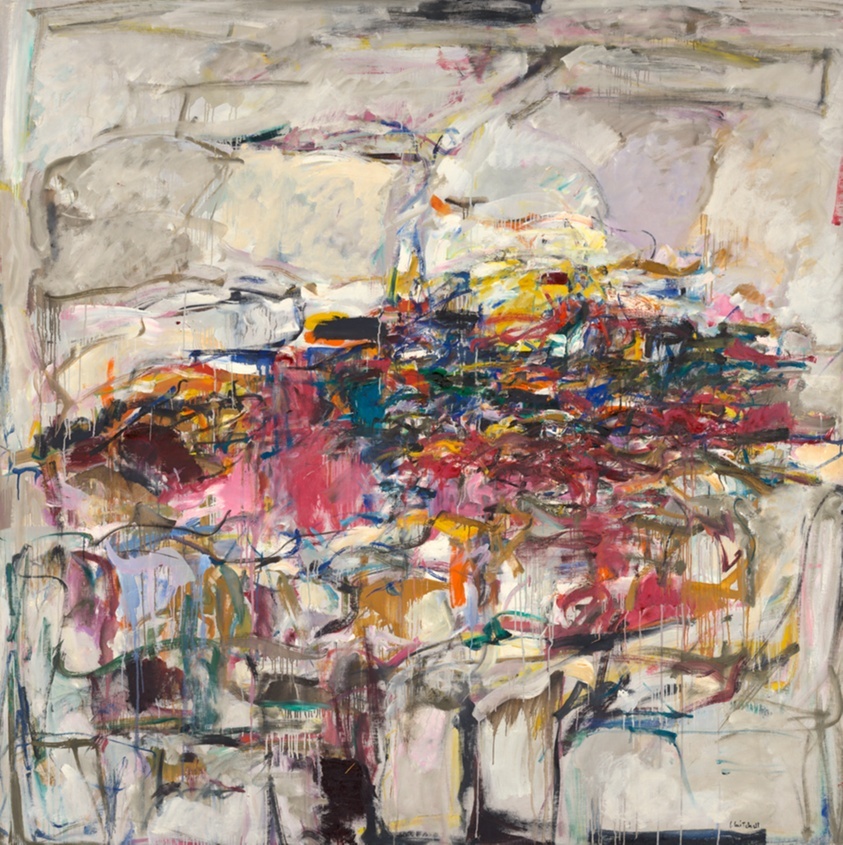
By the early 1950s, he left representational imagery behind entirely, developing a lyrical Abstract Expressionist style that is typified by Rite. His paintings of this period largely consist of irregular blocks of gestural strokes and marks of color floating within the picture plane, often grouped toward the center of the composition. Guston’s most radical shift came in the late 1960s, when he confounded the art world with a new figurative style in which he used blunt cartoon shapes to create a personal iconography.